
August 7, 2022
It’s been a good year for butterflies. We’re seeing swallowtails almost everywhere: they are large and easily-recognized while in flight because of their bold wing patterns. They can take flight any time between May and August.
Western Tiger Swallowtail
Our most common is the Western Tiger Swallowtail (Papilio rutulus). At 9 cm it is the largest and usually has the deepest yellow colouring.

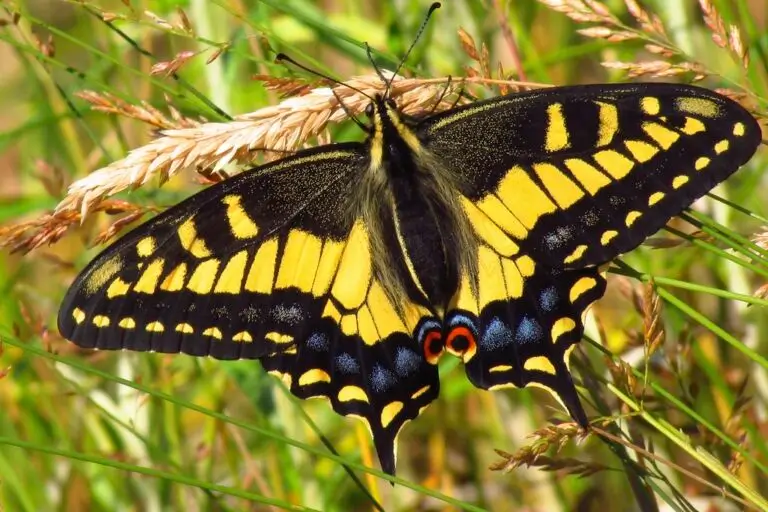
Anise Swallowtail
The next most common is the Anise Swallowtail (Papilio zelicaon). At 8 cm it is the smallest of the three but it is still a very large butterfly, in Squamish terms. The more continuous wide black band along the top edge of its wings makes it easy to recognize.
Pale Swallowtail
Our least common is the Pale Swallowtail (Papilio eurymedon): we have just two observations from Squamish in our Biodiversity Squamish project.
This butterfly is between the others in size, and is distinguished by its very light colour as well as the wider black bands throughout.

What do the larva eat?
The larval food plants for the Western Tiger Swallowtail are mainly cottonwood and willow trees. The Pale Swallowtail caterpillars choose alder. The Anise Swallowtail caterpillar prefers a variety of smaller plants, including cow parsnip and angelica as well as garden plants like dill and carrots.
All our swallowtails overwinter as pupae, the life stage between the caterpillar and the butterfly. For butterflies, the pupa is called a chrysalis.
All photos used by permission. The Anise Swallowtail was photographed by Chris Dale in the Squamish Estuary and the Pale Swallowtail by Judith Holm in a Squamish garden.